
addi vs Sentro Knitting Machine: Which to Buy for Making Hats to Sell
addiExpress vs Sentro knitting machines compared: needles, tube and panel sizes, yarn, row counters, who makes them and which suits selling hats at markets.
Affiliate disclosure: product links on this page go to Amazon, or to the maker's own store for brands that sell only direct. As an Amazon Associate we earn from qualifying purchases, at no extra cost to you; a link to a maker's store earns us nothing. No retailer or brand sees our picks before they are published or has any say in them. How we choose.
Buy the addiExpress Kingsize if you plan to knit hats to sell week after week: it comes from one maker, addi, which publishes its sizes, yarn range and detailed instructions. Buy a Sentro-style 48-needle machine if you want to try machine knitting for a fraction of the cost: it works the same way, with a hand crank, tube and panel modes and a row counter, but "Sentro" machines on Amazon come from many sellers, so specs and quality vary.
The comparison below uses addi's own product pages and instructions for addi, and the Amazon listings for the Sentro-style machines, labelled as such.
Side by side
| addiExpress Kingsize | Sentro-style 48 needle | |
|---|---|---|
| Maker | addi (Altena, Germany) | Many sellers and brand names |
| Needles | 46 | 48 |
| Round knitting | About 35 cm (13.8 in) diameter | Tube mode; size not given in the listing |
| Flat knitting | About 45 cm (17.7 in), up to 43 stitches | Panel mode; size not given |
| Yarn | For US 6 to 11 (4 to 8 mm) needles | Up to 8 mm (per the Amazon listing) |
| Row counter | Mechanical, included | Included (per the listing) |
| Tension settings | Not described | Four (per the listing) |
| Materials | Plastic and metal | ABS plastic (per the listing) |
| Instructions | Published by addi, with patterns | Manual in the box; the listing points to YouTube |
The smaller pair compares the same way: addi's 22-needle addiExpress Professional knits tubes 10 to 15 cm across and flat strips up to 19 stitches, with yarn for US 6 to 11 needles, while a Sentro-style 22-needle machine lists 3 to 5 mm yarn (per the Amazon listing).
Where they are the same
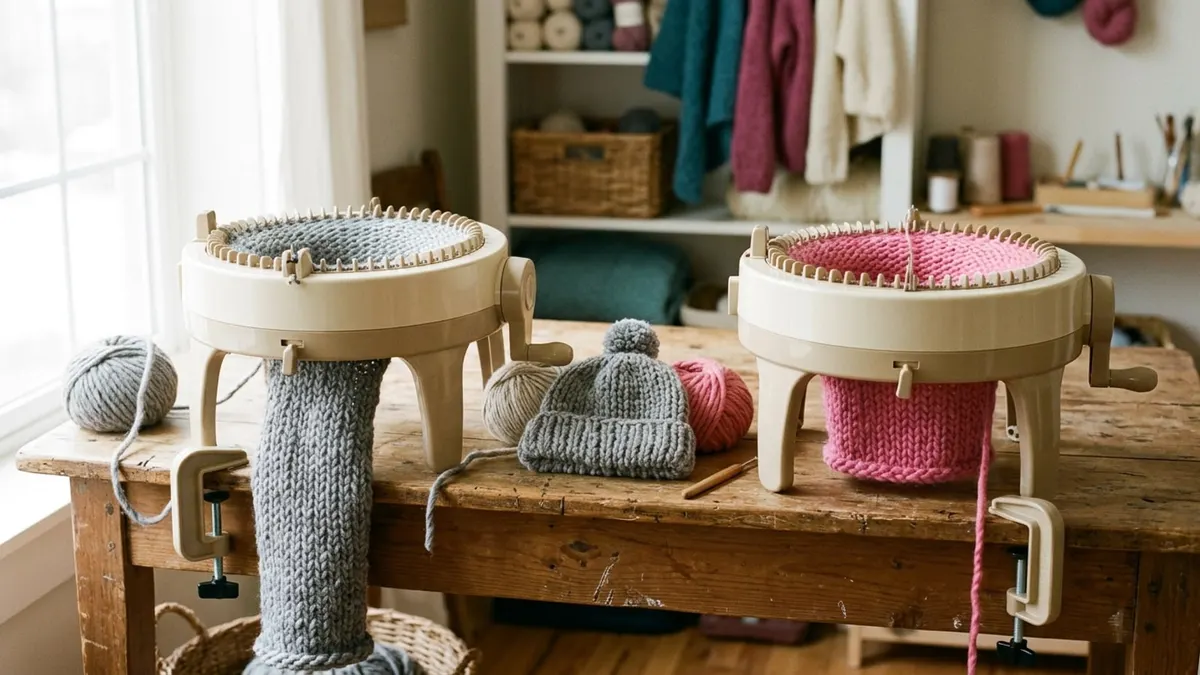
Both are circular hand-crank machines. You thread the yarn onto the ring of needles and turn the handle. In round mode the machine knits a tube with no side seam for beanies, leg warmers and socks; in flat mode you crank back and forth to knit a strip for scarves and panels. Both knit plain stockinette, and both leave the finishing (closing a hat top, a pom-pom, a folded brim) to you.
The 46 and 48 needle sizes are close, so either makes adult-size tubes. The difference in a finished hat comes more from the yarn and tension than from two needles.
Where addi wins
- One maker, published specs. addi states the tube diameter, flat width, stitch count and yarn range, and notes that the exact diameter and stretch depend on the yarn.
- Instructions. addi's basic instruction covers casting on with spare yarn, flat-mode technique, the row counter's quirks, what to do when the handle sticks or stitches drop, and three bind-off methods.
- Patterns. addi publishes cranked jumpers, children's hooded jackets and other patterns for the Kingsize.
- Parts from one source. Replacement needles come from the same maker; the Amazon Kingsize kit includes five (per the Amazon listing).
Where Sentro-style machines win
- Price. They cost a fraction of the addi, which makes them a low-risk test of whether knitted goods sell for you.
- Kits. The 48-needle listing includes a crochet hook, hand needles, a tensioner, yarn and suction-cup legs.
- Tension settings. The listing describes four yarn tensions, from loose to tightest.
- Choice of sizes. 22, 40 and 48 needle versions are easy to find.
The catch is consistency. Because many sellers sell machines under the Sentro name, two machines that look the same can differ in parts and finish, and there is no single spec sheet. The 48-needle listing also warns that yarn thicker than 8 mm can overload the gears. Buy from a listing with clear returns, and keep spare needles on hand.
Using either one for market stock
The technique is the same on both, and addi's basic instruction is the most complete guide to it:
- Cast on with spare yarn. addi says casting on directly gives an elastic but not particularly attractive edge; knit a few rounds in spare yarn first, then switch to the main yarn and later remove the spare.
- Crank slowly and never force the handle. If it sticks, addi says to check the mode switch, rethread the yarn more loosely and look for yarn caught between a needle and its shank.
- In flat mode, turn until the handle stops at each end of the row, and knit an odd number of rows so the piece finishes well for casting off, as addi advises.
- Watch the row counter on narrow pieces. addi notes that on wedges or narrow ribbons its counter only counts every second row up to the 16th stitch.
- Choose a finish. addi describes three: casting off from a circular needle, sewing off with a blunt embroidery needle for an elastic edge, or crocheting off with a 4.5 mm or coarser hook.
Yarn choice matters on both. addi says sturdier yarns work better than very fine, fibrous ones, which can catch in the machine, that thinner yarn gives a looser fabric and thicker yarn a tighter one, and that thin yarn can be knitted doubled.
What about price?
addi's own store listed the Kingsize at 104.58 euros before tax and the Professional at 63.32 euros when we checked on November 7, 2026. Sentro-style machines cost a fraction of that on Amazon. If you sell hats at a few markets a year, the cheaper machine can pay for itself quickly; if you knit stock every week, a machine with published specs and replacement parts from its maker is worth the difference.
Hats are one craft-fair staple; pin-back buttons are another low-cost item to make between batches.
Which to buy
| If you... | Buy |
|---|---|
| Want to test whether hats sell at your market | Sentro-style 48 needle |
| Knit stock every week and want parts and instructions you can rely on | addiExpress Kingsize |
| Make socks, cuffs and small items | addiExpress Professional or a Sentro-style 22 needle |
| Want the machine to crank itself | A purpose-built electric machine such as Caydo's M1 Pro |
Whichever you choose, do not attach a drill to the handle: addi says its machines are not suitable for drills or electric screwdrivers. For a powered option, see the Caydo M1 Pro in our best knitting machine guide.
Frequently asked questions
Is addi better than Sentro?
For regular use, addi's advantage is one maker with published specs, instructions and parts. Sentro-style machines work the same way and cost much less, but come from many sellers, so quality varies.
Can I use the same yarn on addi and Sentro machines?
Mostly. addi gives yarn for US 6 to 11 (4 to 8 mm) needles as a guideline, and the Sentro-style 48-needle listing gives up to 8 mm. The 22-needle Sentro-style listing narrows that to 3 to 5 mm.
Which knitting machine is best for beanies?
A 46 or 48 needle machine: addi's Kingsize knits tubes about 35 cm across. The 22-needle machines are better for socks and cuffs.
Why does my Sentro knitting machine skip stitches?
The same causes addi lists for its machines apply: cranking too fast, yarn held too loosely, or the yarn not catching a needle. Slow down, keep light tension and check for bent needles.
Sources
Cover image: Illustration: CraftsCall (AI-generated)
Related guides
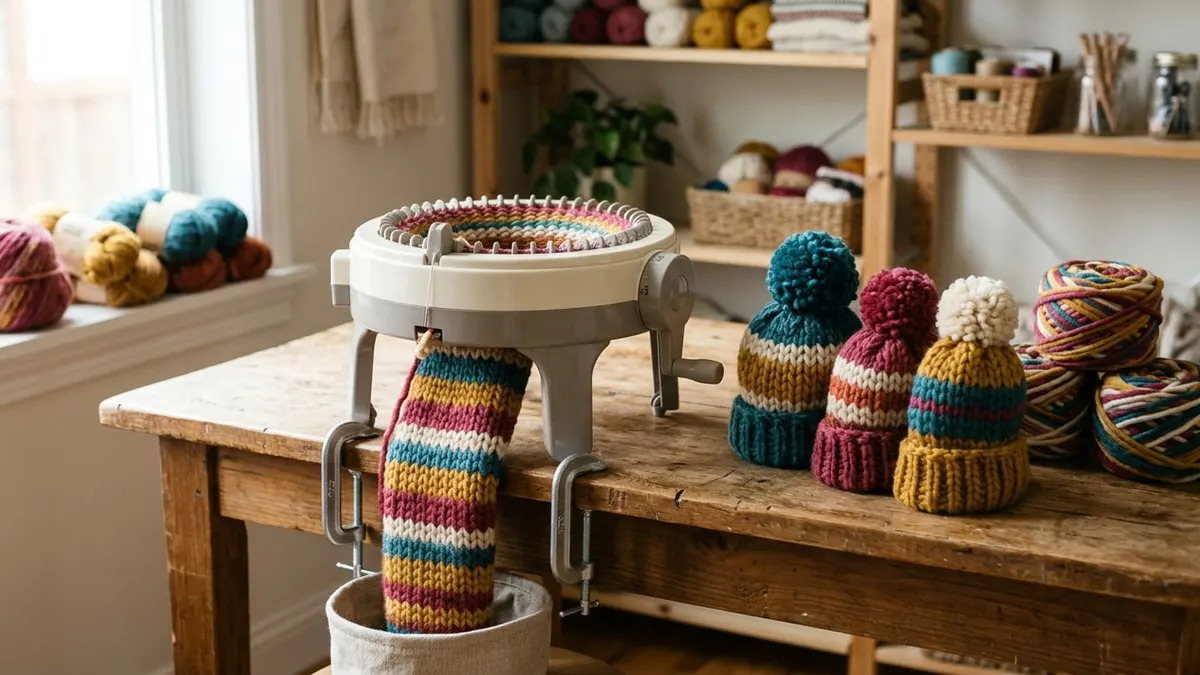
Best Knitting Machines for Hats, Scarves and Market Stock (2026)
Five hand-crank and electric circular knitting machines for beanies, scarves and socks, with needle counts, yarn sizes and what each makes.
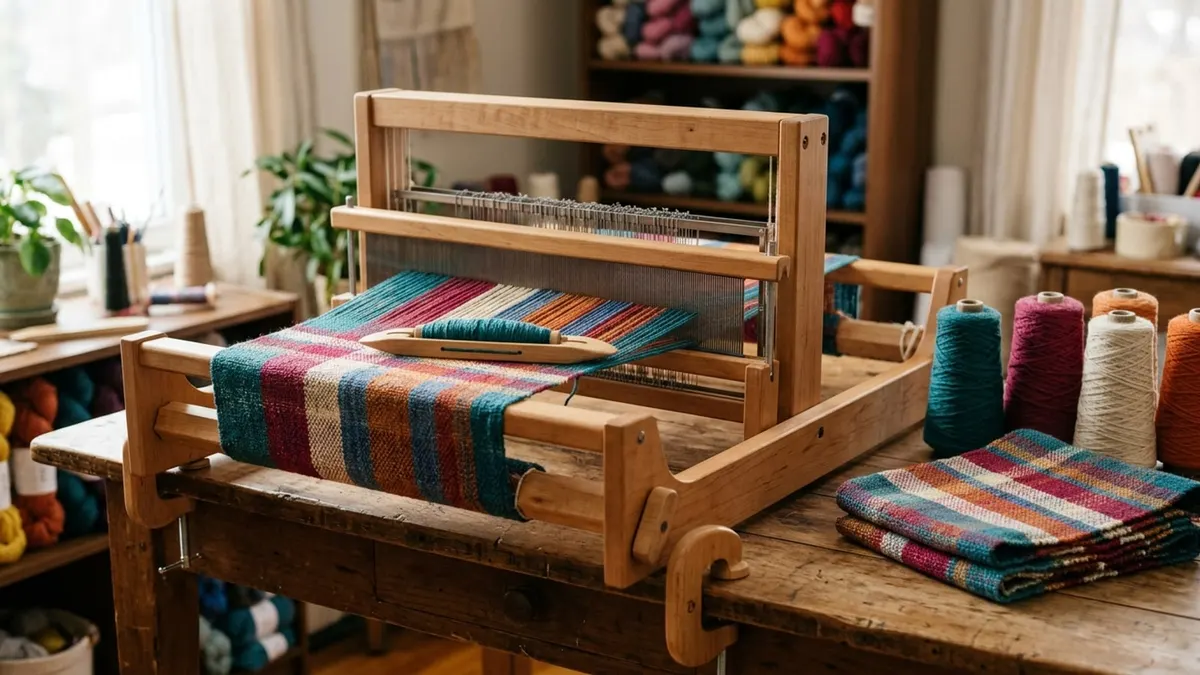
Best Rigid Heddle Looms for Scarves, Towels and Table Runners (2026)
Four rigid heddle looms from a 10-inch Cricket to Ashford's 48-inch loom, with weaving widths, reeds and what each suits for woven goods to sell.
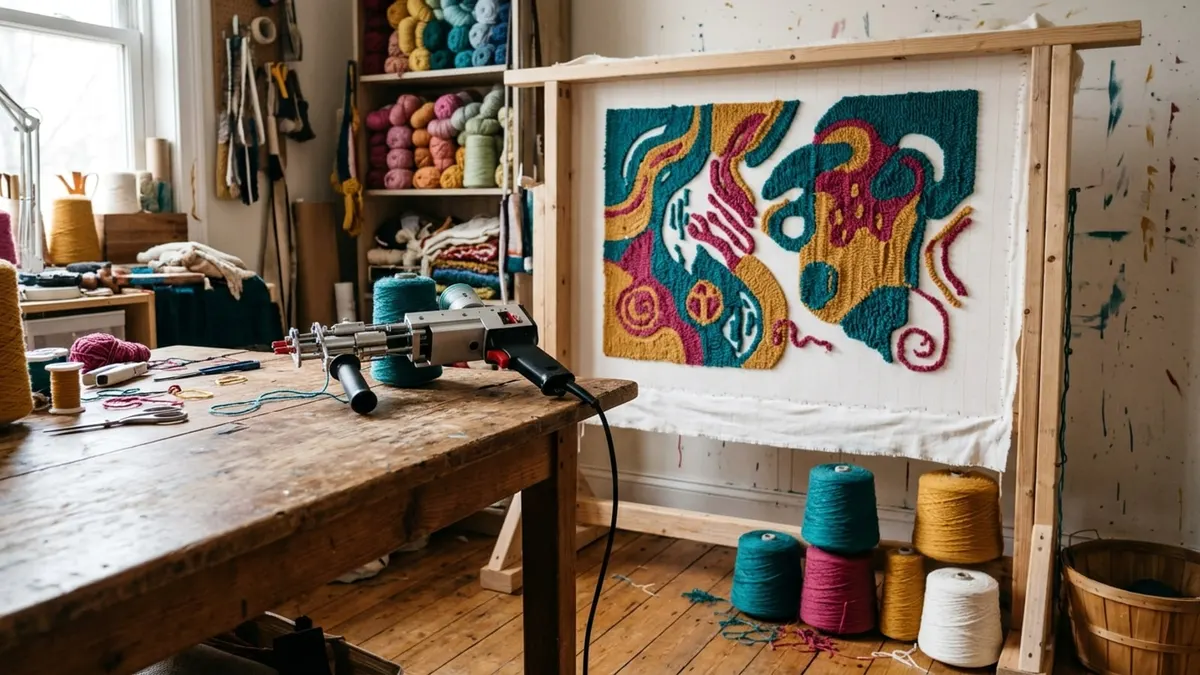
Best Rug Tufting Guns for Making Rugs to Sell (2026)
Five tufting guns from a 7 mm low-pile Duo to a 60 mm pneumatic shag gun, plus the cloth, backing and tools a rug needs.