
Best Sergers for Sewing Knits and Garments to Sell (2026)
The best sergers of 2026 for makers who sew to sell: Brother, Juki and Singer overlockers compared on threads, differential feed, speed and threading.
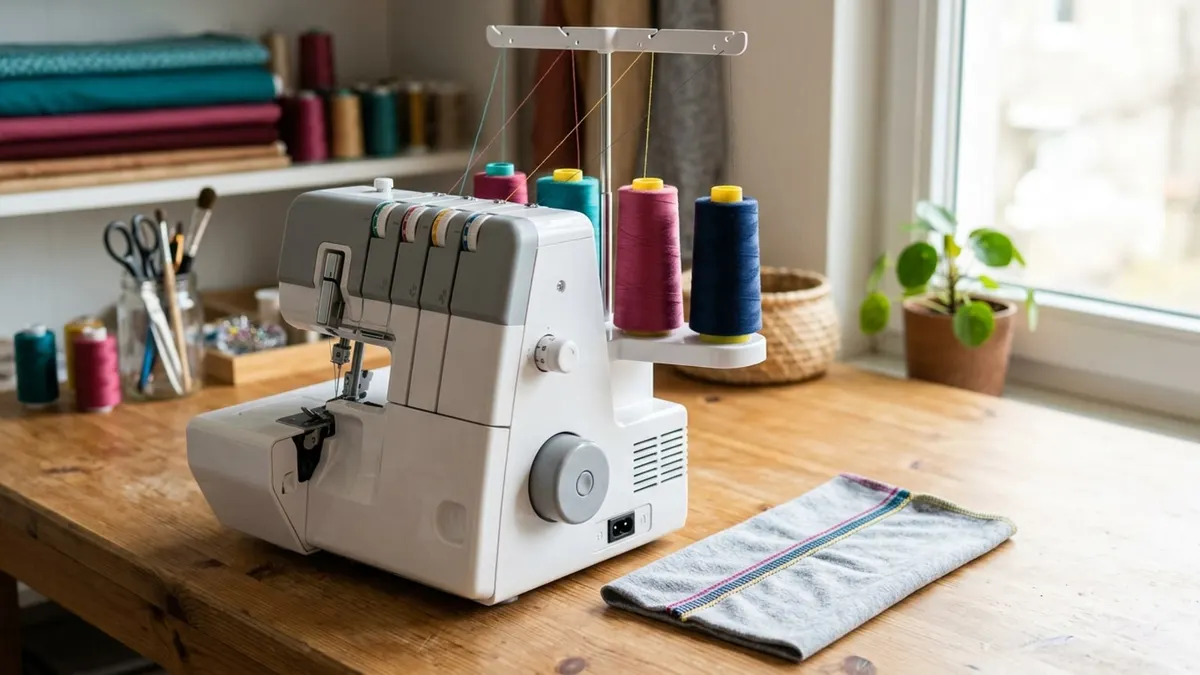
Affiliate disclosure: product links on this page go to Amazon, or to the maker's own store for brands that sell only direct. As an Amazon Associate we earn from qualifying purchases, at no extra cost to you; a link to a maker's store earns us nothing. No retailer or brand sees our picks before they are published or has any say in them. How we choose.
For most people sewing knit garments to sell, the Brother 1034D is the place to start: a 3/4 thread serger with differential feed, color-coded threading and three accessory feet, at a list price of $319.99 from Brother. Step up to the Juki MO-654DE for 2-thread stitches and 1,500 stitches per minute, or to an air-threading machine like the Brother AIR1800 if you change thread colors often.
A serger trims the fabric edge, sews the seam and overcasts it in one pass, which is why knitwear, activewear and kids' clothing sellers lean on one. Every figure below comes from the maker's own product page; where a maker's site could not be read, the figure is marked as coming from the Amazon listing.
Our top picks at a glance
1. Best overall
Brother 1034D SergerThreads: 3 or 4 · Max speed: 1,300 spm · Differential feed: Yes · Threading: Color-coded, lower looper threading system
2. Best step up
Juki MO-654DE SergerThreads: 2, 3 or 4 · Max speed: 1,500 spm · Differential feed: 0.7 to 2.0 ratio · Threading: Color-coded, disengaging lower looper threader
3. Best air threading
Brother AIR1800 Air SergerThreads: 2, 3 or 4 · Max speed: 1,300 spm · Differential feed: Yes · Threading: Air threading for the loopers
4. Best premium
Juki MO-1000 Air Threading SergerThreads: 2, 3 or 4 · Max speed: 1,500 spm · Differential feed: 0.7 to 2.0 mm · Threading: Looper air threading, automatic needle threader
5. Best budget for heavy fabrics
Singer X5004-HD SergerThreads: 2, 3 or 4 · Max speed: 1,300 spm · Differential feed: Adjustable · Threading: Color-coded
| Pick | Threads | Max speed | Differential feed | Threading | Buy |
|---|---|---|---|---|---|
| Brother 1034D SergerBest overall | 3 or 4 | 1,300 spm | Yes | Color-coded, lower looper threading system | Amazon |
| Juki MO-654DE SergerBest step up | 2, 3 or 4 | 1,500 spm | 0.7 to 2.0 ratio | Color-coded, disengaging lower looper threader | Amazon |
| Brother AIR1800 Air SergerBest air threading | 2, 3 or 4 | 1,300 spm | Yes | Air threading for the loopers | Amazon |
| Juki MO-1000 Air Threading SergerBest premium | 2, 3 or 4 | 1,500 spm | 0.7 to 2.0 mm | Looper air threading, automatic needle threader | Amazon |
| Singer X5004-HD SergerBest budget for heavy fabrics | 2, 3 or 4 | 1,300 spm | Adjustable | Color-coded | Amazon |
Best overall
Brother 1034D Serger
A 3/4 thread serger with differential feed, five stitch types and three feet, at Brother's list price of $319.99.
- Threads
- 3 or 4
- Max speed
- 1,300 spm
- Differential feed
- Yes
- Threading
- Color-coded, lower looper threading system
Pros
- Five stitches: 4-thread and 3-thread overlock, narrow hem, rolled hem and ribbon lock, per Brother
- Differential fabric feed "for better stitch quality", per Brother
- Standard, blindstitch and gathering feet included, plus a trim trap
- 1/5/25 year limited serger warranty, per Brother
Cons
- No 2-thread stitches: Brother lists its 2/3/4 thread change as "No"
- Loopers are threaded by hand, which takes practice
- Bulb lighting rather than LED, per Brother's spec table
Brother describes the 1034D as a 3/4 thread serger with two needles, a maximum speed of 1,300 stitches per minute and differential fabric feed. It sews a 4-thread overlock for seams, a 3-thread overlock for lighter seams and edge finishing, and narrow hem, rolled hem and ribbon lock stitches. It comes with a standard foot, a blindstitch foot and a gathering foot, and a trim trap catches the cut-off edge.
The trade-off for the price is threading. The upper guides are color-coded and Brother adds a lower looper threading system, but you still thread both loopers yourself, and rethreading for a color change is the slowest part of using any manual serger. If you sew mostly one or two thread colors, that matters less. Brother sells it for use in the US at 120 volts.
Best step up
Juki MO-654DE Serger
Adds 2-thread stitches, 1,500 stitches per minute and a heavy-duty knife drive, with a JUKI suggested retail price of $1,399.
- Threads
- 2, 3 or 4
- Max speed
- 1,500 spm
- Differential feed
- 0.7 to 2.0 ratio
- Threading
- Color-coded, disengaging lower looper threader
Pros
- 2/3/4 thread stitches, adding the 2-thread options the Brother 1034D lacks
- Maximum overlock width of 6 mm and stitch length up to 4 mm, per Juki
- Heavy-duty knife system with a dedicated drive for light and heavy fabrics, per Juki
- Multi-function standard foot that can feed tape, elastic, ribbon or sequins
Cons
- Juki's page gives no warranty terms; check the seller's terms before buying
- On Amazon it is sold by third-party sellers, often in short supply
- Loopers are still threaded by hand
Juki's MO-654DE is a 2/3/4 thread overlock with a maximum speed of 1,500 stitches per minute, differential feed from 0.7 to 2.0, a maximum stitch length of 4 mm and a maximum overlock width of 6 mm. Juki says the lower looper threader disengages for fast looper threading, and its threading paths are color-coded and marked on the machine.
For a seller, the 2-thread option is the main reason to pay more than the Brother 1034D: 2-thread stitches use less thread for a lighter edge on fine fabrics. Juki also points to a heavy-duty knife system with its own drive, a built-in seam guide on the cover and a multi-function foot for sewing in elastic or tape. The machine weighs 15.5 lb, per Juki.
Best air threading
Brother AIR1800 Air Serger
Threads its loopers with a blast of air at the press of a button, with a Brother list price of $899.99.
- Threads
- 2, 3 or 4
- Max speed
- 1,300 spm
- Differential feed
- Yes
- Threading
- Air threading for the loopers
Pros
- Threading ports connect to each looper by tubes; a button sends the thread through with air, per Brother
- 2, 3 or 4 threads with one or two needles, for flatlock, overlock and rolled hem
- LED-lit work area for dark fabrics
- 1/5/25 year limited warranty, per Brother
Cons
- Brother's list price is close to three times the 1034D's
- For US use at 120 volts only; other use voids the warranty, per the Amazon listing
On the AIR1800, each looper has a threading port connected to the end of the looper by a tube. You feed the thread into the port and press a button, and a gust of air carries it through. Brother pitches this at the job sergers are known for making slow: changing thread colors. The machine sews flatlock, overlock and rolled hem stitches with two, three or four threads and one or two needles, at up to 1,300 stitches per minute, with differential feed and an LED work light.
If you sew small batches in many colors, the time saved on rethreading adds up quickly. If you sew long runs in one color, a manual serger like the 1034D does the same seams for less. Our air-threading serger guide compares the AIR1800 with Brother's Airflow 3000, Juki's MO-1000 and Baby Lock's Jet-Air machines.
Best premium
Juki MO-1000 Air Threading Serger
Air threading for the loopers plus an automatic needle threader, 1,500 stitches per minute and a 9 mm overlock width.
- Threads
- 2, 3 or 4
- Max speed
- 1,500 spm
- Differential feed
- 0.7 to 2.0 mm
- Threading
- Looper air threading, automatic needle threader
Pros
- Looper air threading: insert 1/2 to 1 inch of thread and press the air button, per Juki
- Automatic needle threader and automatic rolled hemming
- Maximum overlock width of 9 mm, wider than the other picks here
- Will not sew with the presser foot up or the cover open, per Juki
Cons
- JUKI suggested retail price of $2,299
- On Amazon it comes from third-party sellers, often in short supply
- 20 lb, so it is a machine that stays on the table
Juki lists the MO-1000 with looper air threading (you insert half an inch to an inch of thread into each hole and press the air control button), an automatic needle threader, automatic rolled hemming and an upper looper converter for switching between 2-thread and 3-thread sewing. It runs at up to 1,500 stitches per minute, with differential feed from 0.7 to 2.0 mm that can be changed while sewing, a 4 mm maximum stitch length and a 9 mm maximum overlock width.
Juki also lists a cool-running LED light, low noise and vibration, adjustable presser foot pressure, an upper knife that can be turned off and a safety lock that stops the machine when the presser foot is up or the cover is open. It is the most expensive pick here, and the case for it is a shop that serges every day and changes threads often.
Best budget for heavy fabrics
Singer X5004-HD Serger
A metal-frame 2/3/4 thread serger with a larger cutting knife, per the Amazon listing.
- Threads
- 2, 3 or 4
- Max speed
- 1,300 spm
- Differential feed
- Adjustable
- Threading
- Color-coded
Pros
- Heavy-duty metal frame, per the Amazon listing
- Cutting knife 60% larger than standard sergers' for thick fabrics, per the Amazon listing
- 2/3/4 thread capability with adjustable differential feed and dual LED lights
Cons
- We could not read Singer's own page, so these figures are the listing's
- The listing's title says 8 stitches and its bullets say six stitch types
- Loopers are threaded by hand
Singer sells the X5004-HD as a heavy-duty serger. The Amazon listing describes a metal frame, 2, 3 or 4 thread stitches, a cutting knife it says is 60% larger than the knives on standard sergers, a speed of up to 1,300 stitches per minute, adjustable differential feed, color-coded threading and dual LED lights.
It is a fit if your products lean toward thicker fabrics such as fleece, denim or canvas bags. The caveat is the source: Singer's site would not load for us, so every figure here is per the Amazon listing, and the listing gives two different stitch counts. Check the current listing before you buy.
What a serger does (and what it does not)
A serger, also called an overlocker, sews with two to four threads at once. A knife trims the fabric just ahead of the needles and loopers wrap thread over the cut edge, so one pass sews the seam, trims it and finishes it. That finish stretches with knit fabric, which is why sellers of T-shirts, leggings, baby clothes and activewear use one.
A serger does not replace a sewing machine. It cannot sew a buttonhole, set a zipper the usual way or topstitch, and a standard serger cannot sew the twin-needle coverstitch hem you see on ready-to-wear T-shirts. That takes a coverstitch machine, such as Baby Lock's Applaud, or a combination machine; Baby Lock's Triumph and Splendor are 8-thread overlock and coverstitch machines. Our serger vs coverstitch vs sewing machine guide sorts out which machine does which job, and the coverstitch machine guide covers the hemming side.
How to choose a serger
Number of threads
A 3/4 thread machine like the Brother 1034D sews 4-thread overlock (Baby Lock calls it a strong finishing stitch) and the lighter 3-thread overlock, plus rolled hems. That covers most garment seams. A 2/3/4 thread machine adds 2-thread stitches, which use less thread for lighter edge finishes on fine fabrics.
Differential feed
Differential feed changes how fast fabric is fed in front of the needles compared with behind them. The normal setting is 1. Bernina's serger tips say to set it toward 0.7 to correct puckering and toward 2.0 to correct fabric stretching out of shape, which is the everyday fix for wavy knit seams, and to use it to gather or make lettuce-leaf edges. Every pick here has it. Juki publishes its range (0.7 to 2.0); Brother lists the 1034D's simply as differential fabric feed.
Threading
Threading the loopers is the part of a serger most people find hardest. There are three levels:
- Manual with color-coded guides: the Brother 1034D and Singer X5004-HD.
- A lower looper threader: the Juki MO-654DE's lower looper threader disengages to make that looper easier to reach.
- Air threading: on the Brother AIR1800 and Juki MO-1000, you push the thread into a port and air carries it through the looper.
On a manual serger, Bernina's tips give the usual shortcut for color changes: set the tensions to 0, cut the old threads at the cones, tie the new threads on, pull them through the loopers, then rethread the needles and set the tensions back. If you sell in many colors, threading time is still real labor. A shop that changes threads several times a day gets more from air threading than a shop sewing a single color in long runs.
Speed and width
Juki's two machines run at up to 1,500 stitches per minute and the Brother and Singer machines at up to 1,300. Maximum overlock width runs from 6 mm on the MO-654DE to 9 mm on the MO-1000. Brother's 1034D page gives two widths (3 to 7 mm in its features, 5 to 7 mm in its spec table), so check the manual if width matters for your seams.
Where you buy
Brother and Singer sell sergers through Amazon itself as well as stores. Juki and Baby Lock sell mainly through sewing machine dealers, and the Juki machines on Amazon come from third-party sellers. Ask a dealer what setup help and service comes with the machine, which counts for more on a machine you will run every day.
The picks side by side
| Machine | Threads | Max speed | Threading | Maker's list price |
|---|---|---|---|---|
| Brother 1034D | 3/4 | 1,300 spm | Manual, color-coded | $319.99 (Brother) |
| Juki MO-654DE | 2/3/4 | 1,500 spm | Lower looper threader | $1,399 (JUKI SRP) |
| Brother AIR1800 | 2/3/4 | 1,300 spm | Air (loopers) | $899.99 (Brother) |
| Juki MO-1000 | 2/3/4 | 1,500 spm | Air (loopers), needle threader | $2,299 (JUKI SRP) |
| Singer X5004-HD | 2/3/4 | 1,300 spm (per the Amazon listing) | Manual, color-coded | Not checked (Singer's site did not load) |
Which serger for which shop
- Starting a knitwear or kids' clothing line: the Brother 1034D.
- Fine fabrics, flatlock and rolled edges: a 2/3/4 thread machine such as the Juki MO-654DE.
- Many thread colors, small batches: the Brother AIR1800 or Juki MO-1000.
- Fleece, denim and bags: the Singer X5004-HD, checking the listing's figures first.
Sewing is not the only way to make shirts to sell: our HTV vs DTF vs screen printing guide covers decorating blanks instead.
Frequently asked questions
Do I need a serger to sell clothing?
Not strictly, since a sewing machine with a stretch stitch can sew knits. A serger trims, sews and finishes the edge in one pass, which saves time on every seam and leaves an edge finish that stretches with the knit.
Is a 3/4 thread serger enough?
For most garment seams, yes. A 3/4 thread machine like the Brother 1034D sews 4-thread and 3-thread overlock seams and rolled hems. A 2/3/4 thread machine adds 2-thread stitches for lighter edge finishes.
Is air threading worth it?
It is worth it if you change thread colors often. On air-threading machines like the Brother AIR1800 and Juki MO-1000, a button sends the thread through the loopers with air, which removes the hardest part of rethreading. If you sew in one color, a manual serger costs much less.
What does differential feed do on a serger?
It changes how fast fabric is fed in front of the needles compared with behind them. Bernina's serger tips say to set it toward 2.0 when fabric stretches out of shape and toward 0.7 when it puckers, and to use it for gathering and lettuce-leaf edges.
Can a serger sew a coverstitch hem?
A standard serger cannot. The two-needle hem on ready-to-wear T-shirts comes from a coverstitch machine or a combination machine; Baby Lock's Triumph and Splendor, for example, are 8-thread overlock and coverstitch machines.
Sources
- Brother 1034D Serger, Brother USA
- Brother AIR1800 Air Serger, Brother USA
- MO-654DE serger, JUKI America
- MO-1000 serger, JUKI America
- Serger FAQ: the basics, Baby Lock
- SergerSense Hints & Tips, BERNINA of America
Cover image: Illustration: CraftsCall (AI-generated)
Related guides
Best Air Threading Sergers: Brother, Juki and Baby Lock Compared (2026)
Four sergers that thread their loopers with air, how each maker's system works, and when air threading is worth paying for.
Best Coverstitch Machines for Hemming Knits (2026)
Four coverstitch machines for the stretchy, ready-to-wear hem on T-shirts and leggings, with what chain, cover and triple cover stitches each sew.
Best Heavy-Duty Sewing Machines for Bags, Denim and Canvas (2026)
Five heavy-duty sewing machines for totes, aprons, denim and canvas, and what actually makes a home machine heavy duty.